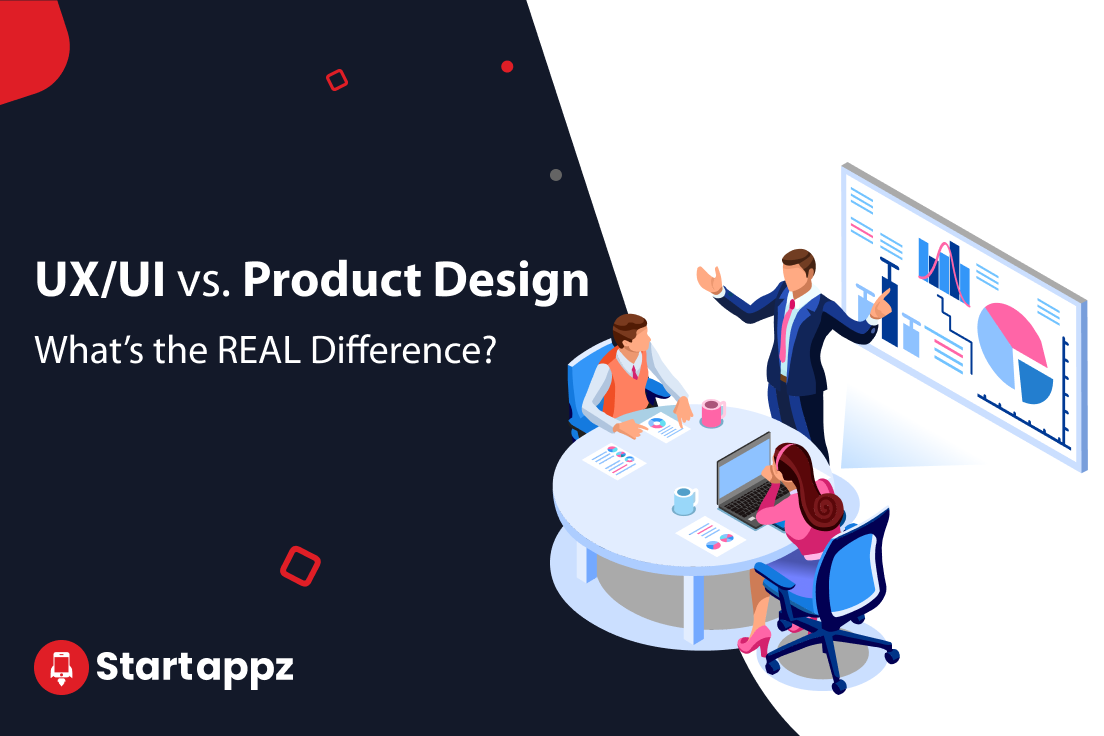
What is the real difference between UX/UI and product design today?

Over the last decade, the design industry has changed dramatically. What used to be called “UX/UI design”, once centered around flows, screens, and usability, has evolved into a strategic discipline that shapes entire digital products.
Today, user experience is not only about guiding the user from point A to point X. It has become a core part of how products are built, how features are prioritized, and how businesses grow. This shift has resulted in new responsibilities, new expectations, and new terminologies like Agile UX, Lean UX, DesignOps, and Product Discovery.
And this raises an important question:
What is the real difference between UX/UI and product design today?
Let’s break it down.
1. UX/UI Used to Be About Improving the Experience: Now It Drives the Business
Traditionally, UX/UI designers focused on:
- Making interfaces intuitive
- Fixing friction points
- Organizing information
- Improving usability
- Designing user-friendly flows
These are still essential.
But modern businesses now see UX/UI as a strategic asset, not just a delivery function.
Today, UX/UI influences:
- Product Direction
- Feature Prioritization
- Conversion Rates
- Retention
- Customer lifetime value
- Growth Metrics
- Brand Perception
Companies know that good UX is good business.
2. Agile UX Changed the Role: Design is Continuous, Not One Phase
Agile UX emerged because the old waterfall approach to design failed to keep up with product realities.
Instead of delivering a full design package and “throwing it over the wall,” designers now work in continuous cycles:
- Define
- Test
- Build
- Measure
- Iterate
This requires designers to deeply understand:
- Business goals
- Product strategy
- Market needs
- Technical constraints
- KPIs and metrics
UX/UI is no longer about making a flow “nice.”
It’s about making the product viable, valuable, and measurable.
3. UX/UI Shapes the Product & Not Just the Interface!
Modern UX/UI responsibilities now include:
- Defining the core value proposition
- Identifying the MVP and feature set
- Writing hypotheses
- Creating success metrics
- Mapping user journeys across the entire ecosystem
- Performing research that influences business decisions
- Testing ideas before engineering invests
- Creating early prototypes for validation
- Refining the roadmap with product managers
In other words:
UX/UI is involved in building the product foundation & not just the screens.
This is why many UX leads today function like product managers.
4. Product Design Goes Even Further: Ownership, Strategy, and Outcomes
So what makes product design different?
A product designer:
- Owns the product end-to-end
- Balances business, tech, and user needs
- Contributes to the roadmap
- Uses data analytics to inform decisions
- Participates in sprint planning
- Aligns stakeholders and teams
- Makes trade-offs between desirability, feasibility, and viability
- Helps the business define “What is next?”
- Ensures what we build makes sense for the company, not just for the user
Where UX/UI is often focused on experience, product design is focused on outcomes.
UX/UI answers:
“Is this usable, intuitive, and meaningful?”
Product design answers:
“Is this the right thing to build, and will it help the business grow?”
5. The Real Challenge: Design Teams Are Expected to Do Both
This evolution has created new pressures inside companies.
Designers today must:
- Think strategically
- Move fast in agile environments
- Constantly iterate and adapt
- Justify decisions with data
- Collaborate with product, tech, and business
- Deliver scalable systems, not one-off screens
- Understand user psychology & market dynamics
- Prepare product roadmaps and MVP definitions
- Measure the impact of their work
The challenge?
Not every company understands this transformation.
Designers are often hired for UI but expected to deliver product strategy.
They are expected to “make it pretty” while also defining KPIs, features, and product direction.
This mismatch is one of the biggest industry challenges today.
Conclusion: UX/UI and Product Design Are Converging, Yet Not the Same
UX/UI has evolved from a visual discipline to a strategic driver of business success.And product design emerged as the natural next step, combining UX thinking with business ownership, product strategy, and measurable outcomes.
In simple terms:
- UX/UI = designing the experience
- Product design = designing the product, the value, and the business impact
Both are essential.
But as products grow more complex and user expectations rise, the industry is becoming more aligned around one core truth:
Design is not just about screens, it’s about building the right product.